


Why “Being an Assessor” Is Not the Only Goal in 2026 — And How Quality Can Move Your Career Forward
A Changing Landscape in UK Education
In recent years, sector bodies, awarding organisations and professional institutes have refreshed their guidance on assessment and Internal Quality Assurance (IQA).
These updates reinforce a clear message: it is not enough for centres to deliver qualifications; they must be able to demonstrate that assessment is valid, reliable and well quality‑assured.
What’s Really Changed – And Why It Matters
Current guidance places stronger emphasis on:
● Authentic, workplace‑relevant or realistic assessment where the qualification requires it
● Consistent, reliable assessment decisions backed by clear evidence and robust records
● Standardisation activities so assessors work to the same interpretation of the standards
● Planned internal quality assurance, including sampling and support for assessors by IQAs
In simple terms: it is no longer enough to just carry out assessments; centres must be able to show that assessment decisions are accurate, fair and compliant with awarding and regulatory requirements.

What This Means for Trainers, Assessors and New Entrants
If you are:
● Working as a trainer or assessor
● Delivering vocational qualifications
● Planning to enter the education and training sector
…then this focus on robust assessment and IQA directly affects you. Centres increasingly prioritise staff who are qualified, compliant and quality‑driven, because this supports successful learner outcomes and positive external quality assurance (EQA) visits.
Understanding the difference between roles is crucial:
● Level 3 Assessor – You plan and carry out assessment and make decisions about learner achievement.
● Level 4 IQA – You plan and carry out internal quality assurance to check, support and improve assessment practice.
The IQA role is not “above” assessing in a strict hierarchy, but it is a common progression route for experienced assessors who want greater responsibility for quality.
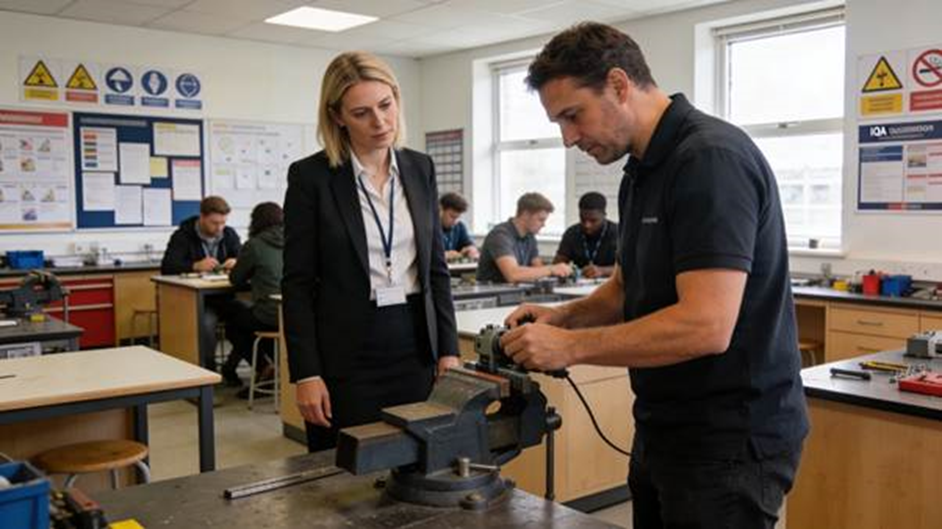
● Side‑by‑side or group shot of a small team: assessors discussing learner work with an IQA or quality lead.
● Tone: collaborative, supportive, professional.
The New Reality: Quality = Career Progression
In the past, the main question might have been: “Can you assess?”
Now the key question is: “Can you demonstrate that your assessment practice meets national and awarding organisation standards?”
That is why we are seeing:
● Growing demand for assessors who understand principles of quality assurance
● Centres tightening their internal processes, documentation and sampling strategies
● Increasing opportunities for those who can take on internal quality assurance and lead on maintaining standards
Rather than replacing assessors, IQA roles sit alongside them – and professionals who can operate confidently in both areas are especially valuable.

Start with Assessment: Your Entry Point
Level 3 Assessment Qualifications (RQF)
A Level 3 assessor qualification allows you to:
● Understand the principles and practices of assessment
● Gain the underpinning theory you need to plan and carry out assessment
● Start even if you are new to assessing (for theory‑only routes)
● Learn to assess vocationally‑related achievement in classroom or training environments
● Develop skills that are ideal for trainers, tutors and workplace coaches
You can also choose the full CAVA qualification (most popular), which combines all relevant units and allows you to assess both knowledge (for example classroom‑based learning) and competence (workplace performance). This makes it the most complete Level 3 assessor route.

Progress into Internal Quality Assurance (IQA)
Level 4 Internal Quality Assurance Qualification
Once you are confident as an assessor, you may decide to progress into Internal Quality Assurance.
An IQA role typically involves:
● Planning IQA activity and sampling strategies
● Sampling learner work and assessor decisions
● Checking that assessment practice and records meet awarding organisation and centre requirements
● Supporting, coaching and standardising assessors to keep practice consistent
● Identifying and driving improvements in assessment and quality processes
In short, you become the person who helps ensure that assessment across the qualification is consistent, fair and ready for external quality assurance.

Why This Assessor–to–IQA Pathway Is So Powerful Now?
This pathway aligns closely with what the sector is looking for:
● Regulated qualifications that are recognised by employers and awarding bodies
● Real‑world assessment skills that support learner success and compliance
● Internal quality assurance knowledge that helps centres meet regulatory expectations
● Clear progression into lead IQA, curriculum lead or quality manager roles
As the industry continues to evolve, assessors who understand quality assurance will stand out, and qualified IQAs will remain highly valued within centres.
If you are unsure where to begin, a practical route is:
1. Start with Level 3 assessor training.
2. Build experience and confidence in assessing.
3. Progress to Level 4 IQA when you are ready to support and lead on quality.
That way, you can build a career that is firmly aligned with the future of UK education and training.