

What the 2026 NHS News Means for Your Job Application and Which Qualifications Actually Help
Introduction:
Why 2026 Is a Turning Point for NHS Job Applicants
Between 15–19 January 2026, UK healthcare news coverage continued to underline a familiar but intensifying reality: the NHS remains under sustained workforce pressure, particularly across frontline care, support, and management roles.
Across policy briefings, NHS workforce commentary, and recruitment updates, three themes dominated:
- Persistent staff shortages, especially in care support, mental health, and community services
- Greater emphasis on UK-recognised, regulated qualifications in recruitment and shortlisting
- Stronger alignment between NHS Jobs criteria and formal vocational qualifications, not just experience alone
For anyone planning to apply for an NHS role in 2026, this reinforces one critical point:
having the right NHS-relevant qualification is no longer optional – it is strategic.
What “NHS Approved Qualification” Really Means

The NHS does not operate a single universal “approval list” of courses. Instead, NHS employers assess qualifications based on whether they are:
- Ofqual-regulated or nationally recognised in England
- Aligned with NHS Knowledge and Skills Framework (KSF)
- Relevant to Care Quality Commission (CQC) standards
- Mapped to real NHS job descriptions (Band 2–Band 6+)
In practice, this means Health & Social Care qualifications regulated by UK awarding bodies are among the most consistently accepted and valued across NHS Trusts.
January 2026 NHS News: Skills Over Shortcuts
Mid-January NHS reporting highlighted that NHS Trusts are increasingly cautious about applicants who lack formal, structured training, even if they have informal experience.
Key takeaways reflected in NHS workforce commentary include:
- NHS employers prioritising evidence-based competence, not short CPD certificates alone
- Greater scrutiny of safeguarding, duty of care, equality, and compliance knowledge
- Increased reliance on Level 3–Level 5 vocational qualifications as proof of readiness
This shift directly affects how applications are filtered on NHS Jobs and during shortlisting.
NHS-Relevant Qualifications That Actually Help You Get Hired
Level 3 Diploma in Health & Social Care
Best for:
Healthcare Assistant (HCA), Support Worker, Care Assistant, NHS Band 2–3 roles
Why it works:
- Considered the baseline professional qualification for adult care roles
- Covers safeguarding, communication, person-centred care, infection control, and professional practice
- Frequently referenced or preferred in NHS job descriptions
For candidates entering the NHS without a university degree, Level 3 is often the strongest entry route.
Level 4 & Level 5 Health & Social Care Qualifications
Best for:
Senior Support Worker, Team Leader, Assistant Practitioner, Care Coordinator, NHS Band 4–5 roles
Why NHS employers value these levels:
- Demonstrates leadership, decision-making, and regulatory understanding
- Supports progression into supervisory or specialist positions
- Aligns closely with CQC inspection frameworks and NHS operational standards
In 2026, NHS Trusts are increasingly using Level 5 qualifications as a differentiator between candidates with similar experience.
Why LCPS Health & Social Care Qualifications Fit NHS Expectations
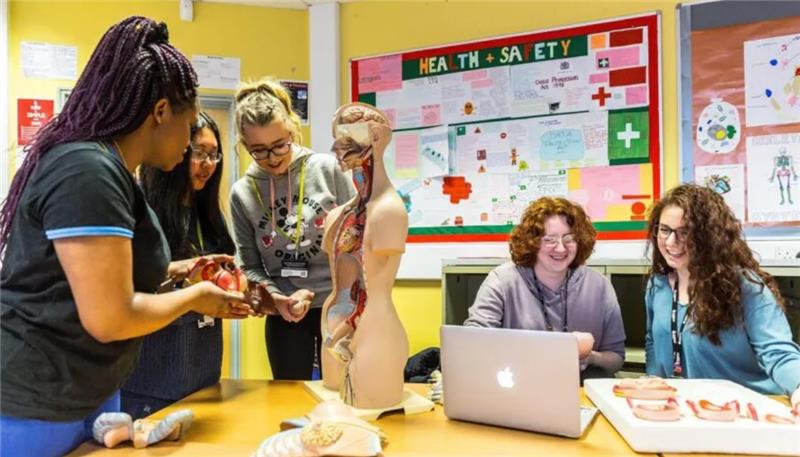
The London College of Professional Studies (LCPS) delivers UK-regulated Health & Social Care qualifications designed around real employment outcomes rather than academic theory alone.
LCPS qualifications are structured to support:
- NHS job applications via recognised awarding bodies
- Adult learners balancing work, family, and study
- Progression pathways from Level 3 → Level 5 → Higher education
For NHS applications, this matters because recruiters look for clear qualification titles, regulated frameworks, and role-relevant learning outcomes.
How to Use Your Qualification Strategically on NHS Jobs
To maximise your success rate in 2026:
- List your qualification clearly under “Education & Qualifications” on NHS Jobs
- Use the exact qualification title (for example: Level 3 Diploma in Health and Social Care)
- Link your learning outcomes to the job’s person specification
- Highlight regulated status and completion (or expected completion date)
NHS shortlisting panels increasingly rely on qualification-based scoring, especially when applicant numbers are high.
References & Official Sources
- NHS Health Careers – https://www.healthcareers.nhs.uk
- Step Into The NHS – https://www.stepintothenhs.nhs.uk
- London College of Professional Studies (LCPS) – https://lcps.org.uk
- Health & Social Care Courses (LCPS): https://lcps.org.uk/courses-category/health-and-social-care-management/
- NVQ Level 3 Health & Social Care: https://lcps.org.uk/product/level-3-diploma-in-adult-health-and-social-care/